
7 Best Rutin and Vitamin C Suppliers for Global Buyers

Time:2026-09-26 Author:Amelia
0%

Global buyers need more than a supplier’s product list when sourcing Rutin And Vitamin C. They need clear specifications, dependable communication, and documents that support practical quality checks. A fine powder in a sample jar may look right, but appearance alone cannot confirm identity, purity, or consistency. Small details matter. Packaging, batch traceability, and storage guidance can affect how smoothly an ingredient moves from factory to formulation site.

This guide introduces seven suppliers for buyers to evaluate, not as a substitute for independent due diligence. It considers product range, available quality documentation, export experience, and responsiveness to common procurement questions. Buyers should request current specifications and certificates of analysis, then confirm that the stated methods and limits fit their requirements. Ask about origin, minimum order quantities, lead times, packaging options, and shipping conditions. Requirements vary by destination and intended use, so confirm local rules with qualified professionals before placing an order. A polished catalog can still leave important questions unanswered. Samples can help assess handling and fit, but they do not replace batch-specific documents or supplier checks. No single supplier will suit every buyer. Use the comparison as a starting point, verify claims directly, and keep a written record of what each company confirms.
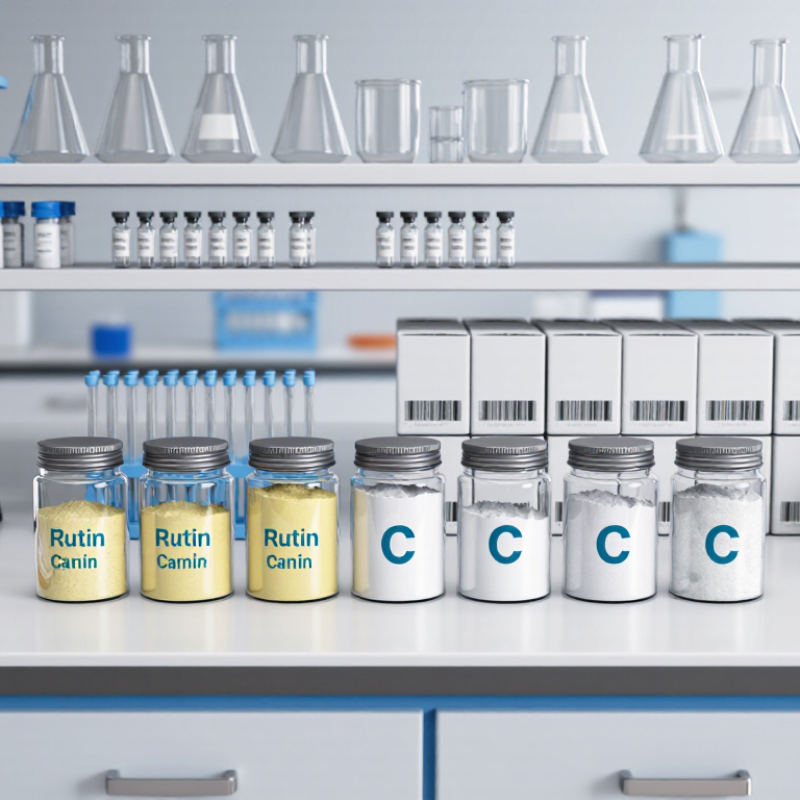
7 Best Rutin and Vitamin C Suppliers for Global Buyers

Understanding Rutin and Vitamin C in Global Ingredient Markets

7 Best Rutin and Vitamin C Suppliers for Global Buyers

Understanding Rutin and Vitamin C in Global Ingredient Markets

Global demand for rutin and vitamin C is shaped by supplements, functional foods, and pharmaceutical formulations. Grand View Research estimated the global vitamin C market at approximately US$1.1 billion in 2023, with steady growth expected through 2030. However, market growth does not guarantee consistent quality. Buyers still need verified specifications.

The seven best suppliers should demonstrate more than competitive pricing. Check assay results, botanical origin, particle size, solvent residues, and batch-to-batch consistency. For vitamin C, confirm whether the material is food, pharmaceutical, or feed grade. For rutin, inspect extraction methods and flavonoid purity. Certificates of analysis should match independent laboratory testing. Small details matter.

The NIH Office of Dietary Supplements lists 75 milligrams daily for adult women and 90 milligrams for adult men as vitamin C reference intakes. It also identifies 2,000 milligrams as the adult tolerable upper intake level. These figures support responsible formulation, not automatic product approval. Regulatory expectations differ across markets. That gap matters.

JECFA specifications, national food standards, and current supplier audits can help buyers assess compliance. Packaging should protect powders from moisture, heat, and light. Ask for stability data, allergen statements, traceability records, and recent microbiological results. Some reports provide attractive market numbers, but their methodologies are not always transparent. Buyers should question them. Cost alone remains a weak selection tool.

Key Criteria for Evaluating Ingredient Suppliers

Choosing a rutin and vitamin C supplier requires more than comparing prices. A polished website is not evidence of technical reliability. Ask for recent certificates of analysis, batch numbers, and testing methods. HPLC results should confirm identity and potency. Microbiological limits must also match your product category and destination market.

Request samples from the same production lot planned for commercial supply. Check color, odor, solubility, and visible particles under controlled conditions. For vitamin C, moisture and oxidation data deserve close attention. For rutin, particle size can affect blending and formulation performance. Suppliers should explain their raw material sources, manufacturing location, and traceability system. Clear records reduce risk when a batch performs differently.

Evaluate packaging for long-distance shipping. Moisture barriers and tamper-evident seals matter. Ask about storage temperatures, shelf life, and transport monitoring. Reliable suppliers can provide stability data, allergen statements, and relevant regulatory documents without evasive answers. Production capacity should be verified through lead-time records, not promises alone. A small trial order may reveal more than a confident sales presentation.

I would also review complaint handling. How quickly does the supplier investigate a failed specification? No supplier is perfect, and documents can contain gaps. That is a useful warning, not an automatic rejection. The important point is whether the company explains weaknesses, corrects them, and records the outcome. Independent audits or qualified third-party testing can strengthen confidence when internal claims remain unclear.

Seven Rutin and Vitamin C Suppliers for Global Buyers

Global buyers need more than a long supplier list when sourcing rutin and vitamin C. Seven supplier types deserve attention: GMP ingredient manufacturers, botanical extraction specialists, pharmaceutical-grade ascorbic acid producers, nutraceutical premix suppliers, contract manufacturers, regional distributors, and laboratory-verified exporters.

Market signals support careful sourcing. Grand View Research valued the global dietary supplements market at approximately USD 177.5 billion in 2023. This scale increases demand for consistent, traceable ingredients. Suppliers should provide batch-specific certificates of analysis, assay results, heavy-metal screening, microbiological testing, and allergen declarations. For rutin, buyers should check botanical origin, extraction solvent controls, and flavonoid purity. For vitamin C, stability data and moisture protection matter during ocean freight.

Documentation is only the starting point. In my purchasing experience, a clean certificate can still hide weak sampling practices. Request retention samples and compare independent laboratory results before signing a long-term agreement. USP and European Pharmacopoeia testing principles can help define identity and purity expectations, while Codex guidance supports safer food-ingredient controls. The seven supplier categories are not equally suitable for every market. A distributor may offer faster delivery, but a direct manufacturer often provides stronger technical support. I would keep one supplier on provisional status until three consecutive batches perform consistently. Small details matter: sealed inner liners, readable lot codes, and storage below the stated temperature limit. Suppliers sometimes overlook them. Buyers should not.

7 Best Rutin and Vitamin C Suppliers for Global Buyers

Supplier Profile Primary Supply Region Rutin Product Forms Vitamin C Product Forms Common Quality Documents Typical Buyer Fit Verification Priorities
Supplier Profile 1 East Asia Rutin powder; standardized botanical extracts Ascorbic acid; sodium ascorbate; calcium ascorbate Certificate of analysis, specification sheet, safety data sheet, allergen statement Bulk importers and supplement manufacturers Assay, particle size, heavy metals, microbiology, batch traceability
Supplier Profile 2 Europe Rutin trihydrate; micronized rutin Ascorbic acid; buffered vitamin C blends Certificate of analysis, GMP-related records, technical data sheet, origin statement Pharmaceutical, nutraceutical, and regulated-market buyers Regulatory status, residual solvents, stability data, change-control process
Supplier Profile 3 South Asia Rutin powder; flavonoid ingredient blends Ascorbic acid; vitamin C premixes Certificate of analysis, HACCP documentation, allergen declaration, packaging specification Private-label and formulation companies Raw-material origin, extraction or synthesis method, moisture, microbial limits
Supplier Profile 4 North America Rutin powder; custom blend options Ascorbic acid; mineral ascorbates; buffered formulations Certificate of analysis, FDA-related documentation where applicable, allergen statement, non-GMO statement Dietary supplement brands and contract manufacturers Labeling compliance, supply continuity, country-of-origin records, lot release testing
Supplier Profile 5 Southeast Asia Rutin powder; plant-derived flavonoid concentrates Ascorbic acid; effervescent vitamin C ingredients Certificate of analysis, microbiological report, pesticide statement, technical data sheet Functional-food, beverage, and powder-product manufacturers Solubility, sensory profile, pesticide residues, moisture, packaging integrity
Supplier Profile 6 Middle East and regional distribution hubs Rutin powder; ready-to-blend premixes Ascorbic acid; sodium ascorbate; calcium ascorbate Certificate of analysis, product specification, halal or kosher documentation where applicable, safety data sheet Regional distributors and buyers requiring consolidated shipments Storage conditions, shipping route, remaining shelf life, import documentation
Supplier Profile 7 Global multi-region sourcing Rutin powder; customized particle-size grades Ascorbic acid; buffered and blended vitamin C systems Certificate of analysis, quality agreement, audit documentation, technical data sheet, traceability records Large-volume buyers seeking dual sourcing and supply-chain resilience Backup production sites, lead time, annual capacity, audit results, contingency planning

Note: Product availability, certifications, specifications, minimum order quantities, pricing, and delivery terms vary by supplier and batch. Buyers should verify current documentation directly before placing an order.

Comparing Supplier Quality, Certifications, and Capabilities

The seven best rutin and vitamin C suppliers are not judged by price alone. Global buyers should compare raw material quality, documentation, and production control. A reliable supplier provides clear specifications for rutin purity, vitamin C assay, moisture, particle size, and microbial limits. Each batch should include a dated certificate of analysis. Independent laboratory results add useful confidence.

Certifications reveal operational discipline, but certificates need verification. Look for current GMP, ISO 22000, HACCP, or FSSC 22000 documentation. Check the certification scope, issuing body, and renewal date. Strong suppliers also maintain allergen controls, heavy metal testing, stability data, and complete lot traceability. Their facilities should separate materials carefully and record temperature and humidity during storage.

Capabilities matter when orders grow. Compare minimum order quantities, blending precision, packaging options, lead times, and export documentation. Suppliers with pilot-scale support can help adjust dosage forms before full production. Some offer botanical identification testing, while others rely mainly on incoming paperwork. That difference matters. Ask for recent samples, not only polished brochures.

I would also review complaint handling and recall procedures. Slow replies can signal weak quality systems. However, even responsive suppliers may have incomplete technical files. That is a risk worth discussing openly. Request change-notification policies, retained-sample practices, and evidence of consistent results across several lots. A lower quote may hide testing gaps, longer release times, or unstable supply.

How to Vet and Select an International Supplier

How to Vet and Select an International Supplier

Selecting a rutin and vitamin C supplier requires more than comparing prices. A polished website is not evidence of quality. Request current specifications, batch-specific certificates of analysis, and clear manufacturing details. The documents should identify assay results, moisture, particle size, microbiological limits, and heavy-metal testing. Ask whether an independent laboratory verified the results.

Check the supplier’s quality system carefully. Look for recognized GMP practices, traceability, deviation handling, and documented corrective actions. Request audit reports or arrange a remote facility assessment. During a call, ask how raw materials are approved and how rejected batches are controlled. Simple answers are useful. Evasive answers are not.

Samples should match the intended product grade and packaging format. Test them before signing a large contract. Compare color, odor, solubility, assay, and stability data with the specification. Confirm production lead times, minimum order quantities, storage conditions, and export documents. Also verify whether the supplier can support your destination market’s labeling and import requirements.

Communication matters. Can the supplier respond clearly across time zones? Can they explain a failed test without shifting blame? One practical warning: low pricing can hide weak testing or inconsistent batches. I would allow room for skepticism, even after a successful sample. Supply chains change, and one good shipment proves little. Reliability is demonstrated through repeated performance, transparent records, and timely corrective action.

FAQS

What documents should an ingredient supplier provide?

Request current specifications and batch-specific certificates of analysis. The documents should show assay, moisture, particle size, and microbiological limits. Heavy-metal testing also matters. Ask for testing methods and laboratory details.

How can I verify the supplier’s laboratory results?

Check whether an independent laboratory verified the results. Compare the reported methods with your product requirements. A polished document can still miss important details. Do not rely on appearance alone.

Should samples come from the planned commercial batch?

Yes, request samples from the same production lot. Test color, odor, solubility, assay, and visible particles. For vitamin C, examine moisture and oxidation data. For rutin, particle size may affect blending. One good sample proves little.

What quality-system details deserve attention?

Look for traceability, deviation handling, and documented corrective actions. Ask how raw materials are approved. Ask how rejected batches are controlled. Simple answers help. Evasive answers are a warning.

What should I check before international shipping?

Review moisture barriers and tamper-evident seals. Confirm storage temperatures, shelf life, and transport monitoring. Request stability data and export documents. Poor packaging can damage a sound ingredient.

How can I judge production capacity?

Review past lead-time records instead of trusting promises. Confirm minimum order quantities and expected delivery schedules. A small trial order may reveal practical problems. Promises are easy.

Does a low price indicate a better supplier?

Not necessarily. Low pricing may reflect weak testing, inconsistent batches, or limited support. Compare documents, sample results, packaging, and repeated delivery performance. Price matters, but it should not lead the decision.

How should supplier complaints be handled?

Ask how quickly the supplier investigates failed specifications. Check whether findings, corrections, and outcomes are recorded. No supplier is perfect. Document gaps deserve attention, not automatic rejection. Transparency matters more than confident sales language.

Can an audit or third-party test improve confidence?

Yes, an independent audit or qualified third-party test can clarify uncertain claims. Use it when internal records remain incomplete. Continue checking later shipments. Supply chains change. Confidence needs renewal.

Conclusion

This guide provides a practical overview of the global market for Rutin And Vitamin C, two widely used nutritional and functional ingredients. It explains their common applications, typical product forms, and the key factors international buyers should consider when sourcing them. Readers will learn how to assess supplier reliability through product consistency, manufacturing capacity, quality control systems, documentation, and responsiveness to international purchasing requirements.

The article also presents seven supplier types and sourcing options without promoting specific brands, helping buyers compare capabilities, certifications, testing procedures, packaging flexibility, and export experience. A structured evaluation process is included to support responsible supplier selection, from requesting technical documents and samples to reviewing certificates, testing results, production standards, lead times, and communication practices. By applying these criteria, global buyers can reduce sourcing risks, improve supply stability, and establish professional, transparent, and long-term ingredient partnerships.

Amelia

Amelia

Amelia is a seasoned marketing professional with a wealth of expertise in our company’s core offerings. With an unwavering passion for driving growth and innovation, she plays a pivotal role in shaping our marketing strategies and enhancing brand visibility. A key aspect of her responsibilities......