Deep-Dive: South Korea's Evolving Demand for Standardized Botanical Actives
The South Korean botanical market represents one of the world's most sophisticated and strictly regulated arenas for natural active compounds. Driven by a highly conscious consumer base and the global expansion of K-Beauty and K-Health (health functional foods, locally referred to as 건강기능식품), procurement strategies have fundamentally shifted. Korean research laboratories and contract manufacturers (ODMs/OEMs) are no longer searching merely for crude botanical powders; the market demands precise, highly standardized active biomarkers verified by high-performance liquid chromatography (HPLC) or ultraviolet-visible spectroscopy (UV-Vis).
The Regulatory Framework: Ministry of Food and Drug Safety (MFDS) Alignment
South Korea’s regulatory environment for raw materials is managed rigorously by the Ministry of Food and Drug Safety (MFDS). For botanical extracts utilized in functional foods, ingredients must be recognized either as Monographed Ingredients (고시형 원료) or Individually Approved Ingredients (개별인정형 원료). This requires botanical suppliers to offer complete validation files including multi-batch Certificates of Analysis (COA), pesticide residue analyses mapping to the Positive List System (PLS), heavy metal margins (Lead, Arsenic, Cadmium, Mercury), and solvent residue limits.
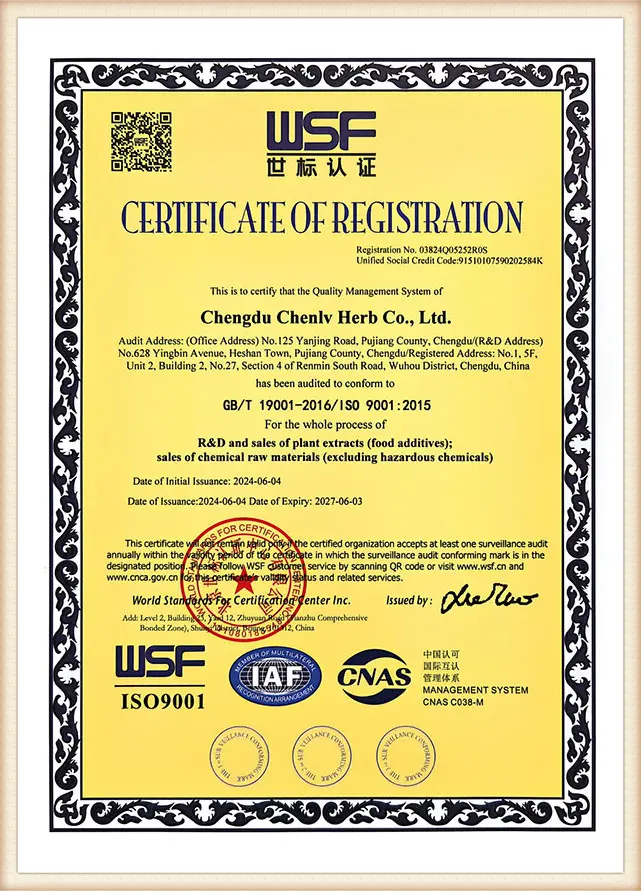
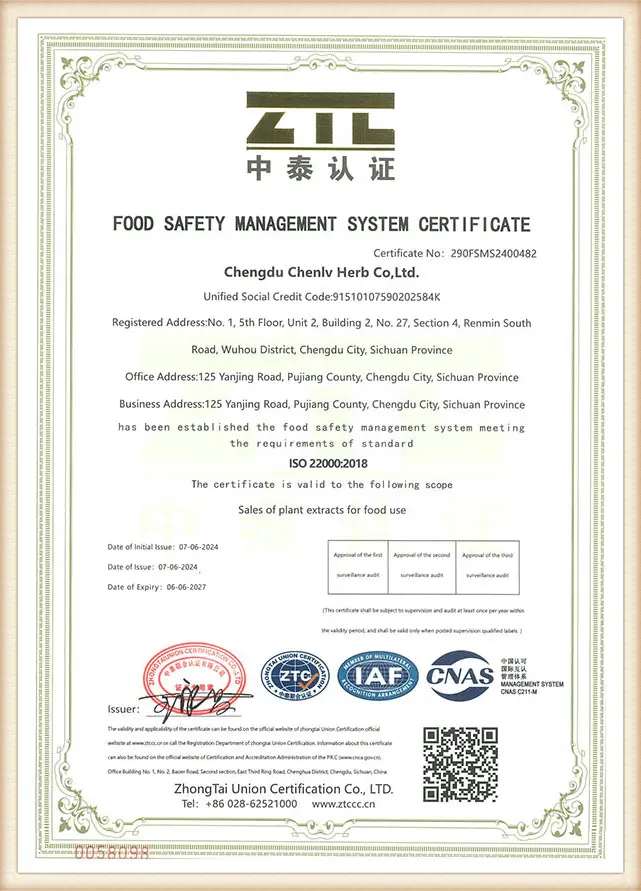
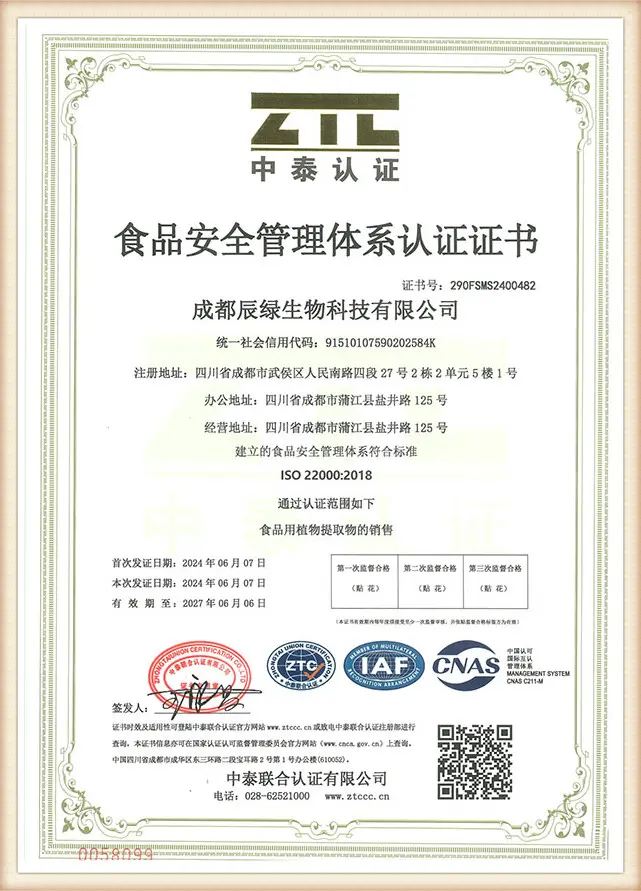
At Chengdu Chenlv Herb, we engineer our extraction processes to specifically align with these parameters. By monitoring critical contamination vectors in our GMP-compliant Chinese factory facilities, we guarantee that all extracts exported to Incheon, Busan, or directly to your compounding plants in Gyeonggi-do satisfy Korean standard inspection procedures on first entry.
Trends in the K-Cosmetics Sector: Pure Actives & Fermentation Pro-actives
Modern cosmetic formulations in Seoul, Incheon, and Jeju-do place immense pressure on raw materials regarding clean labeling, low cytotoxicity, and zero irritation. The cosmetic industry has transitioned towards natural alternatives to synthetic peptides and parabens. Actives that offer anti-inflammatory, hyperpigmentation-reducing, and skin barrier-fortifying properties are highly sought after. Botanical components rich in bioactive secondary metabolites—such as polyphenols, saponins, and flavonoids—form the cornerstone of next-generation Korean skin science.